

An electric winch is one of the most valuable accessories for a 4×4 or off-road vehicle. But not every winch is suitable for every vehicle. The most common variant (the 12V winch) works on the standard electrical system of almost any passenger car, SUV or pickup. Yet there are situations where a 12V connection is just not enough, or proves to be the ideal choice.
In this article, we explain how a 12V winch works, which vehicles and applications it is suitable for, and what to look out for when choosing and installing it.
How does a 12V winch work?
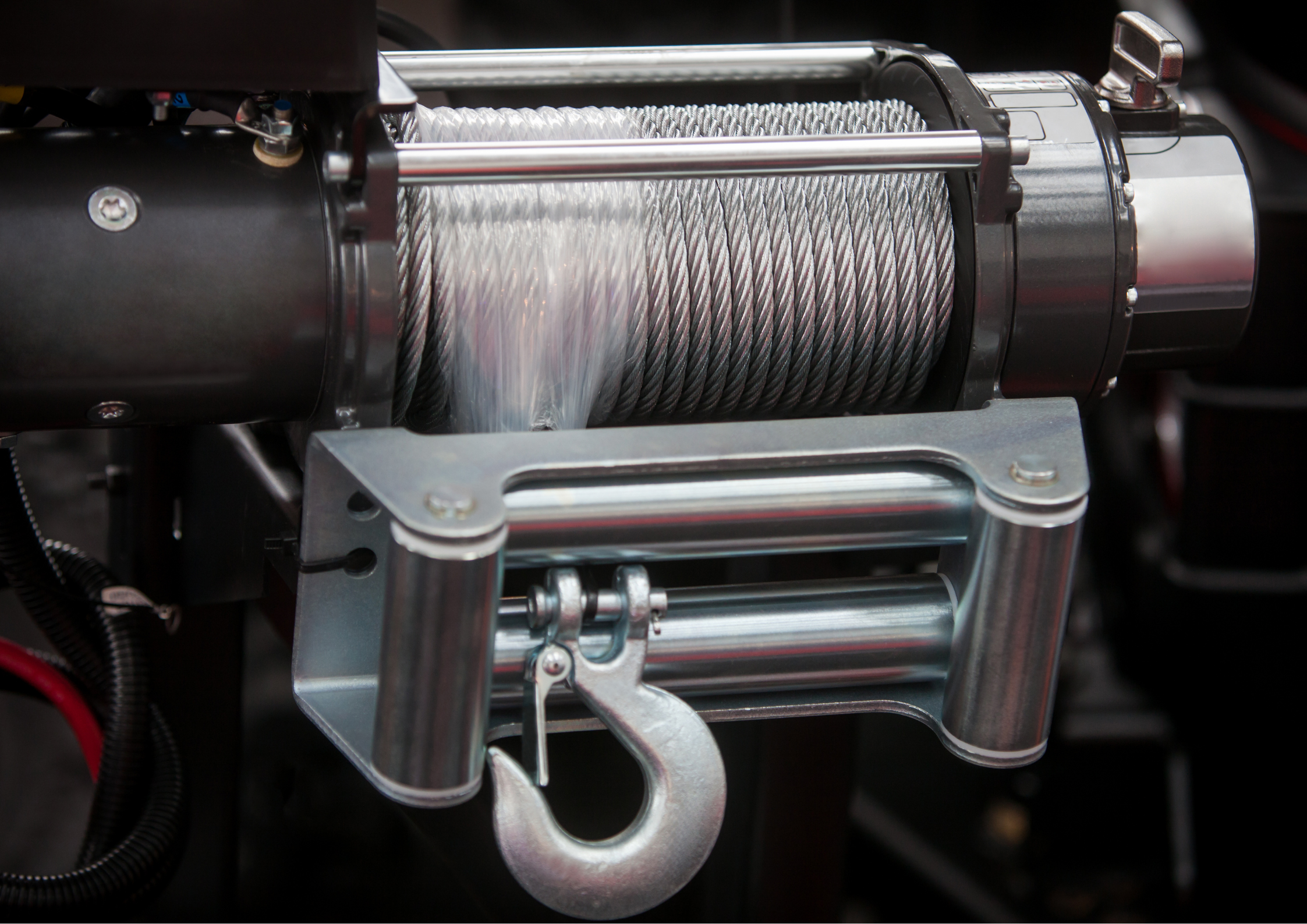
A 12V winch is an electric winch that connects directly to the vehicle's 12-volt battery. The motor in the winch converts electrical energy into pulling power, which you use to wind and unwind a cable or rope. Most 12V winches are controlled via a wired remote or a wireless remote, allowing you to stand safely outside the vehicle while winching.
At maximum load, a 12V winch draws 200 to 500 amps of current. The motor turns a worm gear, which ensures a high gear ratio and therefore considerable pulling power from a relatively compact housing. The winch has a freewheel clutch as standard, allowing you to manually unwind the cable when the motor is off.
For which vehicles is a 12V winch suitable?
The 12V winch is designed for vehicles with a standard 12-volt on-board power supply, which is the case of almost all passenger cars, SUVs, 4×4s, pickups and light commercial vehicles. This makes the 12V winch the most universally usable option on the market.
For recreational off-road drivers with an SUV or 4×4 weighing 1,800 to 3,500 kg, a 12V winch with a towing capacity of 8,000 to 12,000 lbs ample in most cases. Pickup trucks and lighter expedition vehicles are also excellent. UTVs and quads benefit from compact 12V winches from 3,000 lbs upwards that take up little space but are still effective in recovery situations.
Heavier vehicles (such as large shipping trucks or lorries) typically have a 24V onboard network and are thus better served by a 24V winch. A 12V winch can theoretically also be used on a 24V system, but this requires a voltage converter and is not ideal for intensive use.
Also read our blog on choosing the right electric winch for your 4×4 for a more comprehensive overview of pulling power and winch types.
Power and traction: what do you need?
The tensile force of a 12V winch is specified in kilograms or pounds (lbs) and indicates the maximum load the winch can handle at a single cable layer. As a rule of thumb, choose a winch with a pulling force of at least 1.5 times the total weight of your vehicle.
If your 4×4 weighs 2,200 kg, you will need at least a winch with a towing capacity of 3,300 kg, which amounts to about 7,500 lbs. Allow for extra weight due to mud, water or heavy cargo, as this significantly increases the effective driving draw weight. When in doubt, always choose a size larger: a winch that is oversized for your vehicle will work less heavily and last longer.
The motor power of a 12V winch ranges from around 1.5 hp for small models to more than 6 hp for heavy-duty winches. Higher motor power translates into higher pulling power and lower current draw at the same load, reducing battery load.
Battery load and power supply
One of the most underrated aspects when using a electric windlass is the load on the battery and electrical system. A 12V winch draws 200 to 500 amps at maximum load, more than a starter motor. A standard battery can handle this for short periods, but with repeated or prolonged use, you run the risk of a flat or damaged battery.
For recreational and occasional use, a standard 70 to 100 Ah battery is often sufficient, provided the engine is running during winching so that the alternator recharges. For intensive use, such as expeditions or work on location, a second battery (dual battery system) is highly recommended. In addition, always use cables with the right cross-section: cables that are too thin lead to voltage loss and overheating.
Want to know more about electrical installation? Take a look at our blog about 12V systems and cabling for practical explanations.
Use scenarios: when to choose a 12V winch?
A 12V winch is the preferred choice in a wide range of situations. In recreational off-road riding, on mud trails, through forests or over technical terrain, a winch provides the security to pull yourself or a fellow rider out of a jammed situation. This is by far the most common use.
A 12V winch is also essential for overland and expedition trips. You will be driving in remote locations where no salvager is available, and a solid winch can then make the difference between an hour's delay or a night in the field. Always combine the winch with a snatch block and a tree saver strap for maximum versatility.
Outside recreational use, 12V winches are also popular for forestry, site management and light salvage. They are compact enough for permanent mounting on a vehicle and powerful enough for most tasks in the field. For heavy commercial salvage work or vehicles over 5,000 kg, a hydraulic or 24V winch is usually a better choice.
Also check out our blog about snatch blocks and recovery accessories for more tips on safe and effective winching.
Ready to buy a 12V winch?
Whether you are looking for a compact 12V winch for your SUV, a powerful model for your expedition truck or want advice on the right pulling power and installation, at Lensen Products you will find a wide range of reliable electric winches and related accessories.
View our full range of 12V winches and accessories and find the model that suits your vehicle and use.
In doubt or have a specific question? Contact us for free advice - our specialists will be happy to help you.
Related articles: Choosing an electric winch for your 4×4 | Snatch block and recovery accessories | 12V systems and cabling
Frequently asked questions
A 12V winch fits virtually all passenger cars, SUVs, 4×4s, pickups and light commercial vehicles with a standard 12-volt on-board power supply. This makes it the most universally usable winch on the market.
For vehicles up to around 3,500 kg, a 12V winch is more than adequate in most cases. Heavier expedition trucks or trucks with an on-board 24V grid are better off with a 24V winch.
At maximum load, a 12V winch draws 200 to 500 amps. For occasional use, a standard 70-100 Ah battery is sufficient provided the motor is running. For regular intensive use, a second battery (dual battery system) is highly recommended.
Yes. 12V winches are also widely used in forest management, site management and light salvage tasks. They are compact enough for permanent mounting and powerful enough for most practical non-traffic situations.