

Additional lighting is not a luxury but a necessity for many off-road riders. As soon as you go off-road after dark, ride into forest tracks or do heavy work in remote locations, you need more light than your standard headlights can provide. The two most popular options are the LED bar and the LED work light, but which one best suits your situation?
In this article, we explain the difference, discuss the applications for each vehicle and help you make the right choice.
What is the difference between an LED bar and an LED work light?
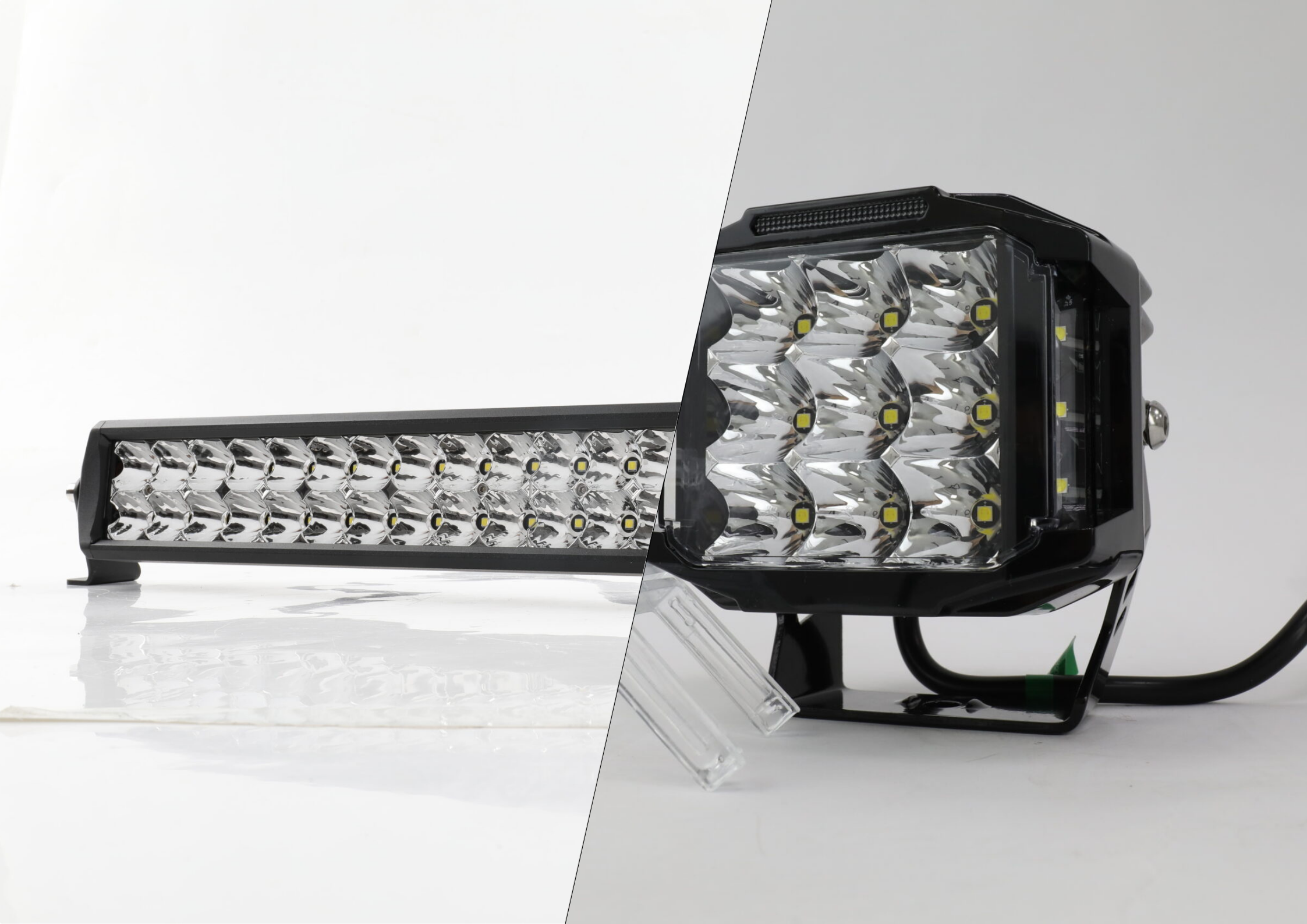
A LED bar (aka LED light bar or light bar called) is an elongated light bar with several LEDs in a row. Its main advantage is its wide beam: an LED bar illuminates a large area far in front of the vehicle, which is ideal at high driving speeds in dark terrain. They are typically mounted on the front bumper, roof rack or above the windscreen.
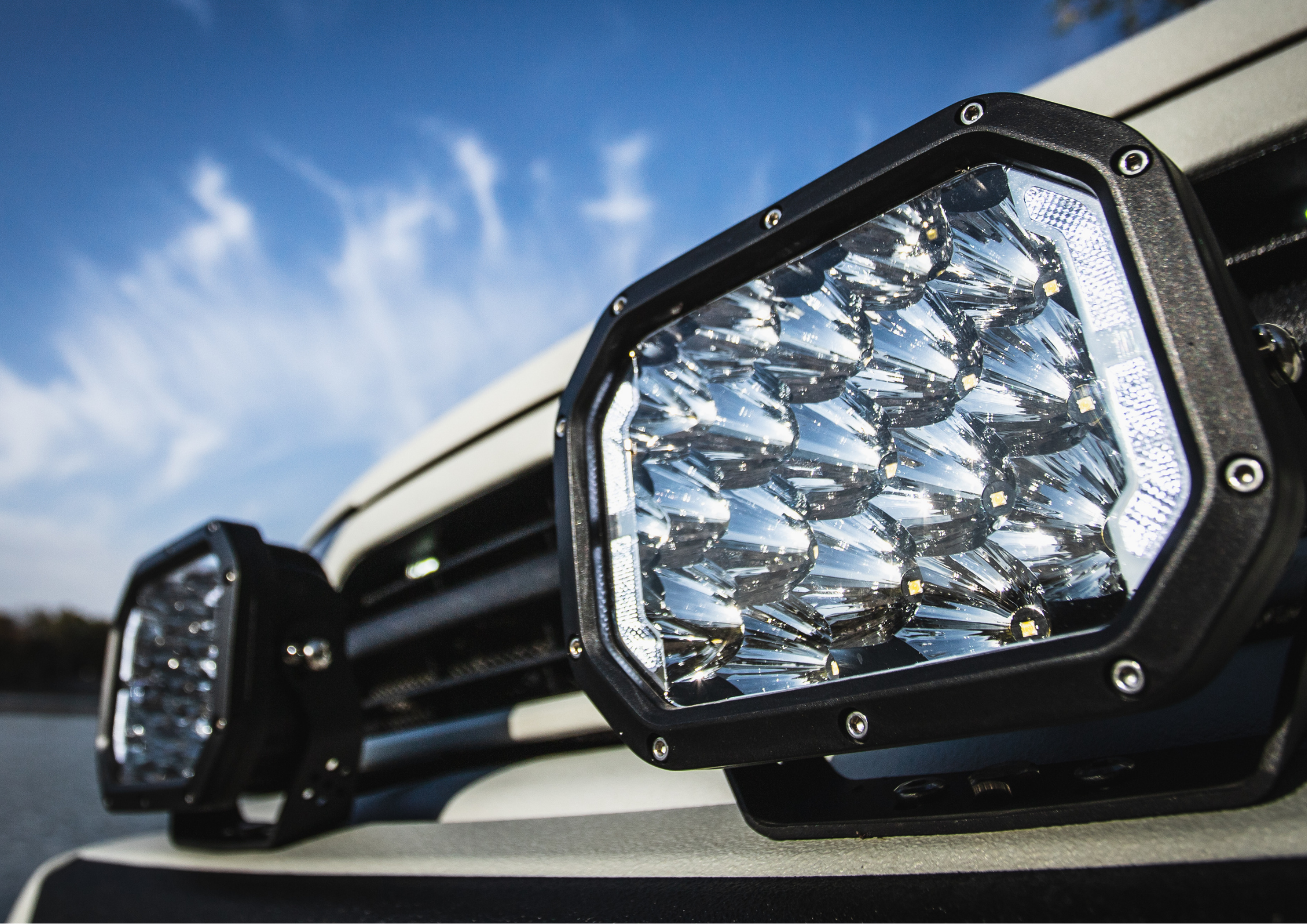
A LED work light on the other hand, is a compact spotlight that delivers focused light to a specific area. They are available as flood (wide, near) or spot (narrow, far) and are used for illuminating the immediate area around the vehicle, in recovery, site work or undercarriage inspection.
In short: you use an LED bar as primary driving lighting, an LED work light as directional supplementary lighting.
Beam: wide and far vs. compact and focused
An LED bar often combines flood and spot LEDs in one housing - also called a combo beam called. As a result, it illuminates widely as well as at a distance. The light output ranges from 10,000 to 50,000 lumens, depending on the length and number of LEDs. This makes an LED bar ideally suited if you want to be able to see the terrain wide and far in front of you while driving.
An LED work light provides concentrated light in a smaller area. A flood worklight illuminates the immediate area wide to about five metres, while a spot worklight focuses the light for more depth. They are ideal as supplements, but do not replace an LED bar as driving lights.
Many off-road riders end up opting for a combination of both: an LED bar at the front for driving lights, supplemented by working lights on the side, at the back of the body or pointed downwards for recovery situations.
Which lighting suits your vehicle?
The best choice depends very much on your vehicle type and use. For an SUV or 4×4 driving recreationally off-road, an LED bar of 50 to 90 cm on the front bumper or roof rack is the most obvious choice, possibly complemented by compact work lights for recovery situations. Pickup drivers who also work on location often combine a wide light bar with work lights on the cargo box.
For agricultural and work vehicles, work lights LED are the standard choice: compact, durable and focused on the working surface around the machine. For UTVs and quads, smaller LED bars of 20 to 30 cm that fit compactly on the frame are sufficient. Expedition and overland vehicles benefit most from a roof rack-mounted LED bar for driving lights, combined with work lights on sides and rear for camping and working lights.
Also read our blog on off-road accessories for 4×4s for more inspiration on putting together a complete off-road setup.
Practical tips for assembly and installation
Proper installation is at least as important as the choice of lamp itself. Always check the current draw and make sure you have a suitable fuse and relay, an LED bar draws considerable current at full power. Use waterproof connectors, as off-road conditions are tough on electrical connections. Preferably choose a model with IP67 or IP68 certification for optimal protection against water and dust.
Mount work lights on adjustable brackets so you can deploy them in a targeted manner. With an LED bar, pay attention to the beam angle: a combo beam is the most versatile for most off-road applications. Want to know more about electrical installation? Check out our blog about 12V systems and cabling for practical explanations.
Indispensable accessories for off-road lighting
Besides the lamp itself, there are a number of accessories that make all the difference in off-road lighting. A protective grille or stoneguard protects the LEDs from branches and stones on the terrain. Good mounting clips or a roof rack bracket ensure stable and vibration-free mounting - important on rough terrain. Also consider a separate switch or switch relay set for easy control from the cab.
For the electrical connection, pre-assembled cable sets with relay and switch are a convenient time saver. Read more about the necessary accessories in our blog on offroad recovery and lighting.
Ready to upgrade your off-road lighting?
Whether you are looking for a powerful LED bar for your 4×4, a compact LED work light for your pickup or a complete lighting set-up for your expedition vehicle, at Lensen Products you will find a wide range of quality off-road lighting.
View our full range of off-road lighting and find the right LED bar or work light for your setup.
Not sure which lighting suits your vehicle? Get free advice from our specialists. We'll help you put together the perfect setup.
An LED bar is an elongated light bar that illuminates wide and far, ideal as primary driving lighting in dark terrain. An LED work light is a compact spotlight that delivers focused light to a specific area, such as in recovery or site work.
Depending on the length and number of LEDs, light output ranges from 10,000 to 50,000 lumens. A combo beam version illuminates both wide and remote, making it most versatile for off-road use.
Absolutely, that is precisely the recommended approach. Many off-road riders mount an LED bar up front for driving lights and add work lights on the side, rear or pointed down for recovery and camp lighting.
Choose at least IP67 or IP68. This ensures that the lamp is fully protected against dust and temporary immersion in water, essential for off-road use in mud and wet conditions.