

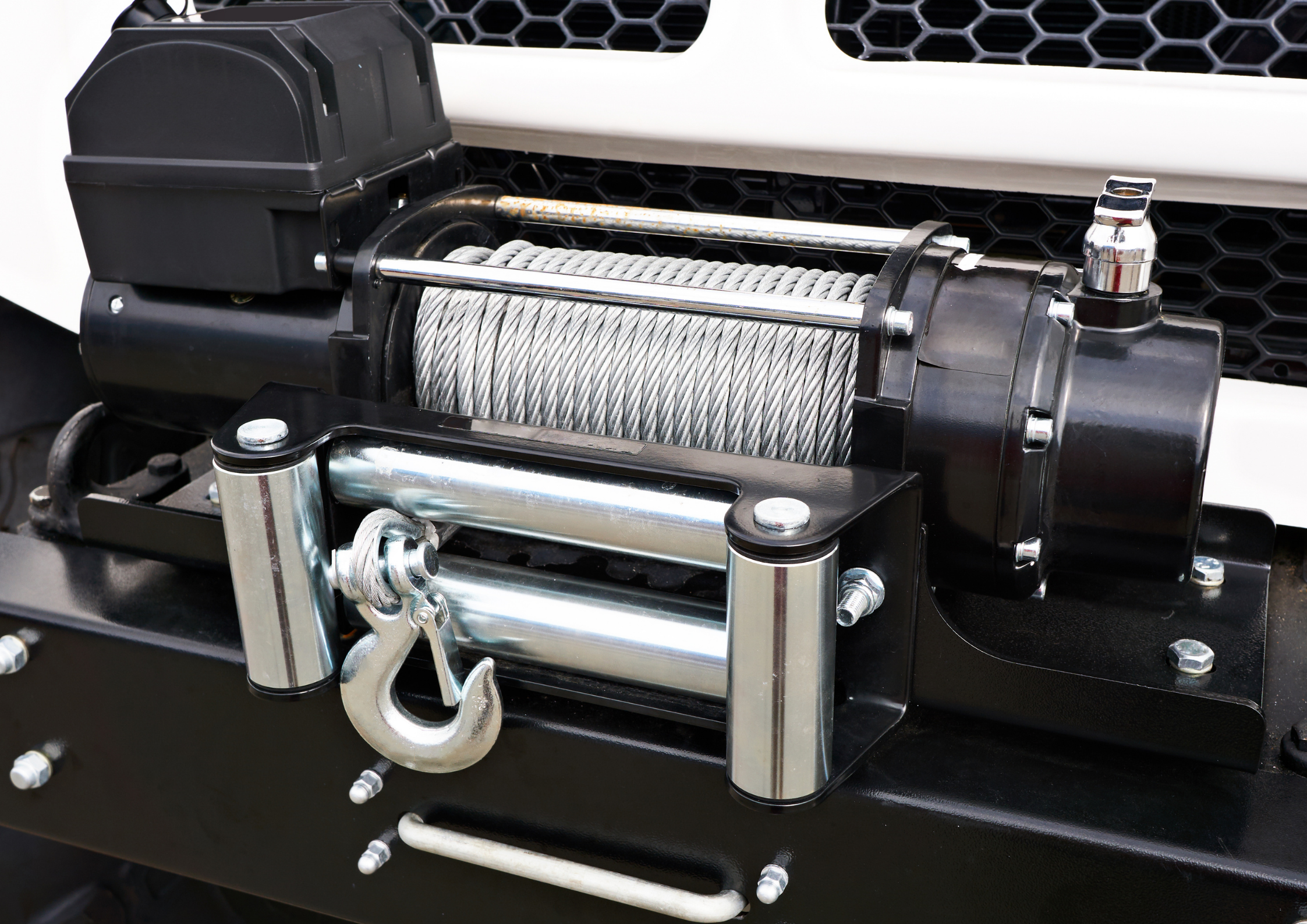
Your electric winch has a tensile force of 8,000 lbs, but the terrain demands more. Or the anchor point is not directly in front of your vehicle and you can't unwind the cable properly. In both situations, a snatch block is the solution. It is one of the most compact and effective recovery accessories you can carry, but also one of the most underrated.
In this article, we explain exactly what a snatch block does, when to deploy it, how to use it safely and what load limits to keep an eye on.
What is a snatch block?
A snatch block is a single pulley block that you can place around the winch cable or synthetic rope without disconnecting the cable. The block opens on one side, allowing you to easily insert the cable. You then close the block and attach it to an anchor point, such as a tree, rock or other vehicle, via a D-clasp.
Snatch blocks are available in different load classes, usually denoted in tonnes. For use with a 12V winch on an average 4×4, a snatch block with a working load of at least 4.5 tonnes is common. Always choose a model with a safety factor of at least 4:1 in relation to the maximum pull of your winch.
How does a snatch block affect traction?
The biggest practical advantage of a snatch block is doubling the effective pulling force. By passing the winch cable through the block and attaching the end back to the vehicle itself, or to a second anchor point, you create a dual cable run. This distributes the load over two cable sections, doubling the effective pulling force without increasing the load on the winch motor.
Does your winch have a tractive force of 8,000 lbs, then with a double cable run you are effectively pulling with 16,000 lbs. This is particularly useful when your vehicle is deeply stuck in mud or sand, or when the resistance is greater than the winch can normally handle. An additional benefit: the winch motor does not have to work as hard, which improves the lifespan of the winch.
Also read our blog on choosing electric winches for your 4×4 for more explanation on traction and power.
When do you use a snatch block?
A snatch block is indispensable in two situations. The first is when you need more tractive force than your winch alone can deliver, for example with deeply stuck vehicles, steep inclines or tough road conditions. By doubling the cable, you get significantly more power from your existing winch without buying a heavier or more expensive winch.
The second situation is when the anchor point is not directly in front of or behind your vehicle. A winch pulls most efficiently and safely in a straight line. If the only available anchor point is to the side or at an angle, you can use the snatch block to redirect the pulling direction. You attach the block to the side anchor point and run the cable through it back to a point directly in front of the vehicle. This keeps the winch pulling straight while the force still comes from the right direction.
Additionally, with two snatch blocks and a longer cable, you can set up a triple cable run for even more pulling power, useful in extremely heavy recovery situations or when winching heavy machines.
Safety when using a snatch block
Safety is the most important thing in any recovery operation. A few rules to always observe. Before every use, check that the block, D-lock and cable or rope are free from damage, tears or deformation. A damaged component can collapse under load without warning. Always use gloves when working with a wire rope, loose wires can cause deep cuts.
Place an aggravation mat or recovery blanket over the cable between the winch and the block. If the cable breaks under tension, the mat absorbs the recoil and prevents serious injury. Never stand in the line of the cable when the winch is under tension, and make sure bystanders are at a sufficient distance.
Also check the attachment of the anchor point carefully. When using a tree, always choose a tree saver strap to protect the bark and distribute the force evenly. D-locks should be fully closed and locked before starting the winch. See our blog on recovery accessories and winchen technique for a complete overview of safety guidelines.
Which snatch block suits your winch?
Choosing the right snatch block depends on the pulling force of your winch and the diameter of your cable or rope. Always check that the cable groove of the block fits the thickness of your cable, a groove that is too narrow causes extra wear and can damage the cable. Most snatch blocks for standard 12V winches are suitable for cables from 9 to 12 mm.
Choose a snatch block whose working load is at least equal to the maximum pull of your winch, preferably well above that. For a 9,500-lb winch, choose a block with a working load of at least 4.5 tonnes. Cheap blocks with unclear specifications are a risk not worth taking in recovery situations.
Also read our article on the 12V winch: power, traction and battery load for more context in choosing the right combination.
Ready for a better recovery setup?
A snatch block is a small investment with a big practical effect. Combine it with a tree saver strap, D-locks and good winch gloves for a complete and safe recovery kit you can always take with you.
View our full range of recovery accessories and put together your own recovery kit.
Do you have questions about which accessories fit your winch and vehicle? Contact us for free advice - we are happy to help.
Frequently asked questions
A snatch block is a single pulley block that you use to divert the winch cable. By making a double cable run, you double the effective tensile force of your winch without increasing the load on the winch motor.
With a double cable run via a snatch block, you double the pulling power. If your winch has a capacity of 8,000 lbs, you will effectively pull 16,000 lbs. This is particularly useful for deeply stuck vehicles or steep slopes.
Choose a snatch block whose working load is at least equal to the maximum pull of your winch, preferably well above that. Also check that the cable groove fits the thickness of your cable (usually 9-12 mm for standard 12V winches). Always choose a model with a safety factor of at least 4:1.
Never stand in the line of the cable when the winch is under tension. Place an aggravation mat over the cable to absorb recoil in case of breakage. Always wear gloves when working with wire rope. Before use, always check the block, D-clasp and cable for damage.