

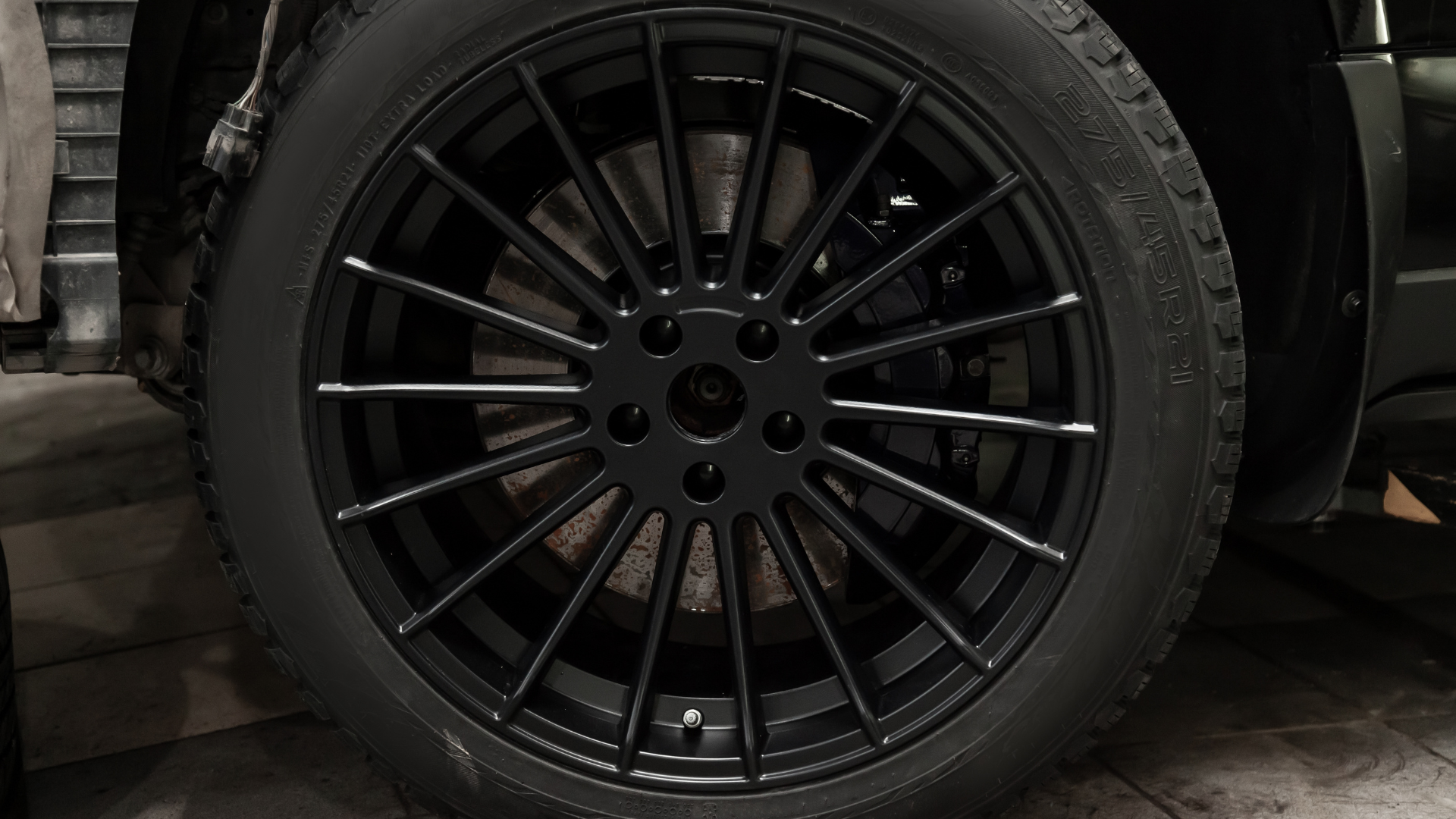
If you’re serious about off-road driving, or simply want to keep your off-roader running smoothly and reliably on the road, then alloy wheels are no afterthought. They bear the full weight of your car, absorb every impact the terrain throws at you, and help determine whether your tyres maintain their grip when it really matters. Yet rims are often chosen primarily for their looks. In this blog, we explain what 4×4 rims are all about, so you can make a choice that suits how and where you drive.
Steel or aluminium rims?
The first question you ask yourself is: steel or aluminium? Both have their place, and the answer depends on how you intend to use it.
Steel rims are the classic choice for heavy off-road use. They are strong, forgiving and easy to repair. If you bend a steel rim whilst off-roading, in many cases you can simply hammer it back into shape and carry on driving. They are also more affordable. The downside is weight: steel is heavier, which affects your unsprung mass and your fuel consumption.
Aluminium (alloy) wheels are lighter, which benefits your suspension, handling and fuel economy. They look sleeker and allow heat from your brakes to dissipate more effectively. However, they are more vulnerable to a really hard impact: aluminium does not bend in the same way as steel, but can crack. For a mix of on-road and off-road use, aluminium is often the best all-rounder.
Dimensions: the figures that matter
You don’t buy a wheel rim on a whim. These specifications determine whether it will fit and work properly:
Diameter and width (for example, 16×8) to determine which tyre will fit. For off-road driving, many riders deliberately choose a smaller diameter (15 or 16 inches) with a higher sidewall, as this provides extra cushioning and grip on rough terrain.
Punch circle (PCD), such as 6×139.7, must match your car’s hub exactly. This is non-negotiable: if the bolt circle doesn’t fit, the wheel won’t fit.
Offset (ET) determines how far the rim is set inwards or outwards. A lower or negative offset results in a wider track and a more aggressive stance, but make sure there is enough clearance for your suspension, brakes and mudguards.
Hub bore (centre bore) must fit onto your bike’s hub to ensure a vibration-free fit. Hub rings can sometimes help to correct this.
Beadlock rims: grip at low tyre pressure
For those who really head off-road, beadlock rims are a serious upgrade. At extremely low tyre pressure – which you use for maximum grip on sand, rock or mud – there is a risk that the tyre will come off the rim. A beadlock mechanically secures the tyre bead against the rim using a bolt and washer, so you can safely run the tyres very low on pressure without the tyre coming off.
This technology comes from the world of heavy-duty off-road and competitive driving, and it requires correct fitting and regular checks of the bolts. But for those who regularly drive on low tyre pressure, the difference in traction and safety is enormous.
Which wheel is right for you?
In a nutshell: choose based on how you’ll use it, not just on its appearance.
If you mainly drive on the road with the occasional forest track, a smart alloy wheel in the right size is ideal. If you’re heading properly off-road, with tough going and plenty of knocks, then steel wheels or beadlocks are worth considering. And if you’re unsure about the bolt circle, offset or clearance on your specific model, do check before you order – it’ll save you disappointment when fitting them.
At Lensen Products, you’ll find tyres and rims, beadlocks and the necessary fitting equipment for a wide range of 4×4 projects. Not sure what’s suitable for your vehicle? Please feel free to get in touch via info@lensenproducts.nl Or send us a message, and we’ll help you find a solution.